
 Facebook
 X
X
 Pinterest
 Copy Link
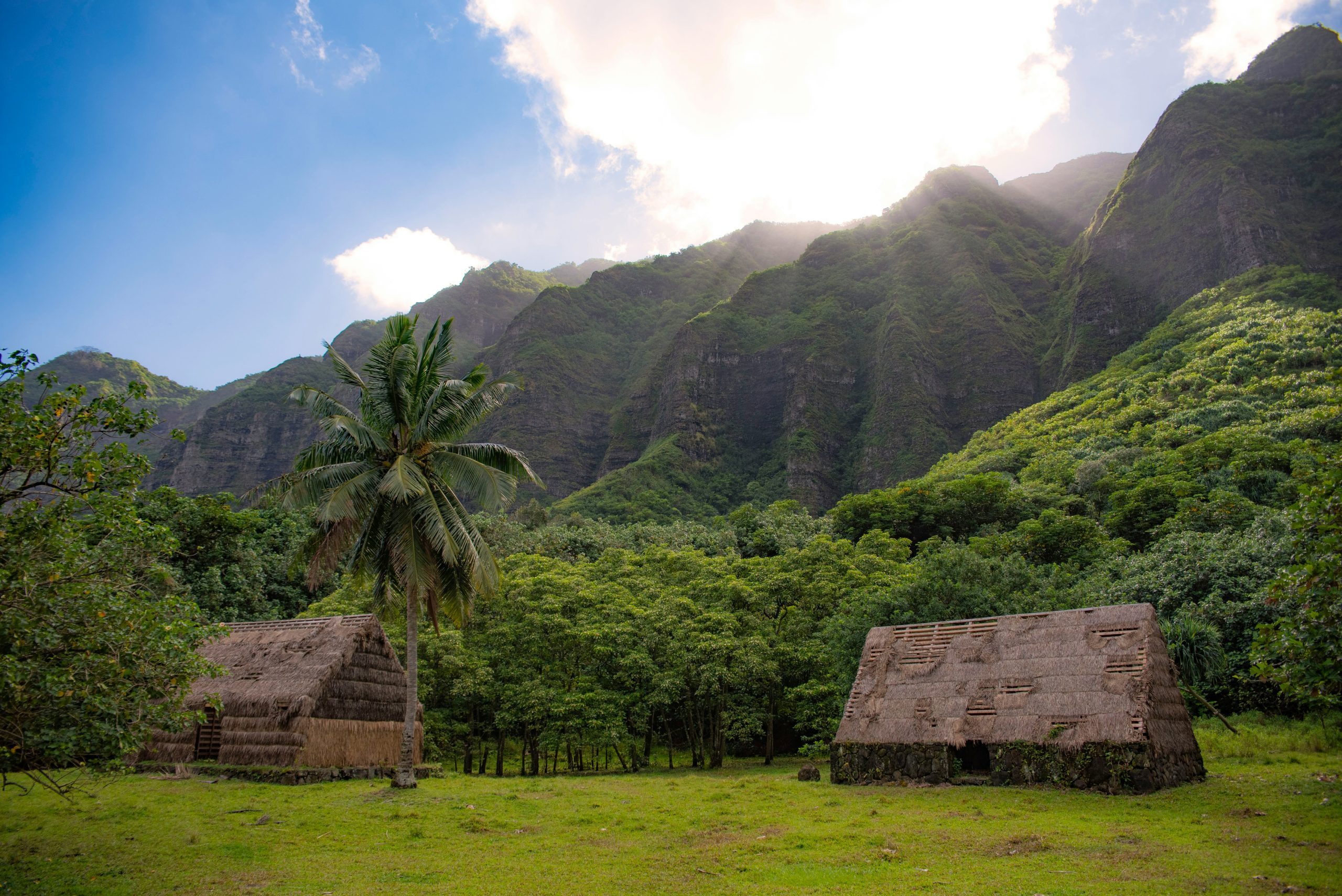
Kānaka Have Been in Washington Since the 1820s. Here’s Why That Matters If You’re Buying a Home
September is Hawaiian History Month. Hawaiʻi made it official in 2025 with Act 167, anchoring the observance to Queen Liliʻuokalani’s September 2 birthday and recognizing the contributions of the Native Hawaiian community. It took years of advocacy by the Hawaiʻi Ponoʻī Coalition and the Association of Hawaiian Civic Clubs to get there.
I’m kanaka maoli — Hawaiian-Portuguese-Filipino-Irish, born in Hawaiʻi, now rooted in the Pacific Northwest — and I chair the Communications and Marketing Committee for Mokuʻāina A Wakinekona Hawaiian Civic Club here in Washington. So this month lands close to home for me. It also connects directly to my work, in a way that surprises a lot of people.
Hawaiian history is Washington history – Kānaka have been in this region for two hundred years.
Between roughly 1820 and 1850, hundreds of Hawaiian men came north to work for the Hudson’s Bay Company, most of them landing at Fort Vancouver on the Columbia. They built and ran sawmills, sailed company ships, coopered barrels for salted salmon, and farmed. They lived in a settlement outside the fort walls that everyone called Kanaka Village, which grew to dozens of buildings. The Puget Sound Agricultural Company hired Hawaiian workers on the Nisqually prairie and in the Cowlitz River country. Many married Indigenous women and stayed. Their names are still on the map — Kanaka Creek, Kanaka Bar, the Owyhee River, an old spelling of “Hawaiʻi.”
Here is the part that rarely makes the postcard version: as American settlement expanded in the 1840s, Hawaiians in this territory were denied U.S. citizenship and were explicitly excluded from owning land.
That exclusion didn’t end in the 1800s. Between the 1920s and the 1960s, racially restrictive covenants were written into deeds across Washington — clauses that barred non-white families from owning or occupying a property. The Racial Restrictive Covenants Project at the University of Washington and Eastern Washington University has documented nearly 80,000 of them statewide.
Two centuries of being here. Two centuries of being told, in writing, that you couldn’t own a piece of it. Homeownership is how most American families build wealth and pass it down, and a lot of families never got to start the clock.
What the Covenant Homeownership Program does about it
In 2023, the Washington Legislature passed the Covenant Homeownership Act with bipartisan support. The Washington State Housing Finance Commission launched the program on July 1, 2024.
Here’s how it works:
- A zero-interest second loan for down payment and closing costs, on top of your primary mortgage
- Up to 20% of the purchase price, with maximum assistance of $150,000. This also helps avoid mortgage insurance premiums.
- Repaid when you sell or refinance not through monthly payments
- Possible full forgiveness after five years if your household income was at or below 80% of area median income when you bought, and the home stays your primary residence
- Funded by a $100 recording fee collected on Washington real estate transactions — including, yes, the ones I close
In its first year, from July 2024 through June 2025, the program delivered more than $60 million in down payment loans to over 500 households, with an average loan around $110,000. By early 2026, reporting put the cumulative total above 1,100 buyers.
Who qualifies — and the part I want you to hear clearly
The basic requirements, per the Commission:
- First-time homebuyer
- Household income at or below 120% of area median income for the county where you’re buying *(the Legislature raised this from 100% under H.B. 1696, effective July 27, 2025)*
- Completion of a Commission-sponsored homebuyer education class
- Work with a Commission-trained lender
- You, or a direct ancestor, lived in Washington before April 1968, and belong to one of the groups identified in the Covenant Homeownership Study — which includes Native Hawaiian and other Pacific Islander, along with Black, Hispanic, Native American, Alaska Native, Korean, and Asian Indian
That pre-1968 Washington residency requirement is where the diaspora question gets real. If your ʻohana moved up here in the 1980s for work, this particular program won’t be your path — and I’d rather tell you that now than after you’ve gotten your hopes up.
But don’t assume you know your own family’s timeline. Kānaka were working Washington canneries, shipyards, farms, and military bases long before 1968. A great-grandparent who passed through Bremerton or Tacoma or the Yakima Valley counts. The Commission’s staff will actually help you review family history to see whether you qualify — that’s a real service they offer, not a brush-off. Call before you rule yourself out.
One honest caveat about timing
Once you are approved, you are added to a waitlist for funding of your downpayment. This could mean that you have to wait 3-4 months before you can start shopping for a home.
What that means for you practically: if you think you might qualify, start the conversation now rather than later, and confirm current program status with the Commission or your lender before you build a plan around it.
Where to start
If you want to find out whether you or your family qualify:
- Washington State Homeownership Hotline: 1-877-894-4663 — free, and they’ll route you based on where you actually are in the process
- Program details: wshfc.org/covenant
- Or call me. I can connect you with a Commission-trained lender, walk you through how the pre-reservation and authorization steps affect your house-hunting timeline, and make sure your paperwork is in order before you’re under contract.
Queen Liliʻuokalani spent the last years of her life insisting that her people’s claims be heard and recorded. Hawaiian History Month asks us to keep that record honest — including the parts that happened two thousand miles from the islands, in the place a lot of us now call home. Knowing that history is one thing. Using it to get a family into a house is another.
If that’s your family, let’s talk.
Emelie Ortiz | Windermere Real Estate/Lake Tapps, Inc. | Licensed Real Estate Broker, WA #25001933
206.519.7436 | emelie@windermere.com | emelieortiz.com
